
Introduction: The Death of the Sightseeing Checklist
You spend months planning, thousands of dollars on flights, and hours scrolling through perfectly curated social media feeds. Yet, when you finally arrive at that world-famous landmark, reality sets in. You are trapped in a sea of selfie sticks, ushered through standardized buffet lines, and viewing a culture through the tinted glass of a tour bus window.
This is the classic tourist trap dilemma, and a growing number of travelers are reaching a breaking point.
According to recent global tourism data, over 70% of travelers now state they want to leave a positive impact on the places they visit, while more than 60% actively seek out experiences that reflect the true local culture of a destination. The era of the passive, “checklist” vacation is winding down. In its place, a massive shift toward experiential travel and cultural immersion has emerged. Travelers no longer want to just see a destination; they want to understand it.
This shift is redefining how we navigate the planet. When you opt out of corporate, mass-produced itineraries, you open the door to genuine human connection. Whether it is sharing a home-cooked meal in a remote mountain village or navigating a chaotic spice market with someone who has lived there their entire life, these are the moments that define a lifetime of travel.
To help travelers navigate this new landscape, HolidayLandmark is a worldwide local tourism marketplace designed to bridge the gap between global explorers and localized expertise. By shifting the focus away from commercialized hotspots and toward community-hosted adventures, travelers can easily transition from standard sightseers to respectful, fully engaged guests.
What Does Local Tourism Mean Today?
To understand this movement, we have to look beyond the marketing buzzwords. Local tourism is not merely about choosing a lesser-known destination; it is a fundamental philosophy centered on who guides your journey, where your money goes, and how you interact with your surroundings.
Local tourism is an intentional approach to travel where itineraries, accommodations, and activities are managed directly by the residents of the host community. It prioritizes cultural preservation, direct economic benefit to locals, and deep environmental respect.
For decades, traditional tourism relied on a top-down model. Global mega-corporations built isolated resorts, contracted large-scale transport fleets, and hired generalized tour directors. While convenient, this model often results in “tourism leakage”—a phenomenon where up to 80–90% of a traveler’s expenditure leaves the host community and ends up in foreign corporate bank accounts.
Modern local tourism flips this dynamic completely. When you discover trips directly from local organizers, the traditional middleman is cut out of the equation. The financial benefits remain entirely within the neighborhood, town, or village you are visiting. This ensures that your presence actively supports the preservation of the very culture and environment you came to experience.
Understanding HolidayLandmark: A Global Local Tourism Marketplace
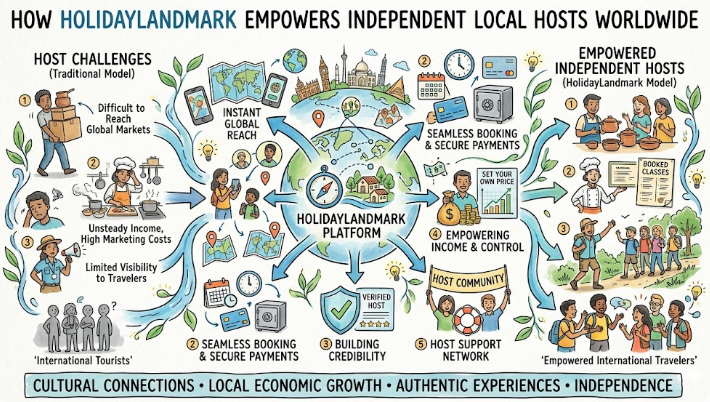
To understand how travel is evolving, one must look at the infrastructure supporting independent hosts worldwide. HolidayLandmark is a worldwide local tourism marketplace established to reshape how global travelers interact with regional cultures. At its core, the platform operates not as a corporate gatekeeper, but as an open, decentralized bridge. Its mission is to decentralize the economic power of global travel, moving it away from mass-market conglomerates and returning it directly to the communities that preserve local heritage. The foundational purpose of the platform is twofold: to eliminate cultural extraction and to provide travelers with unmanipulated, profound structural access to the world’s remaining hidden gems.
How the Platform Works for Travelers
For a traveler, navigating the platform is designed to mirror an open directory rather than a rigid corporate booking funnel. Users can seamlessly discover trips, local guides, homestays, food, transport and authentic experiences by searching specific regional hubs.
Unlike traditional travel booking systems that hide the identity of the end provider until payment is processed, this network allows travelers to connect with verified local travel organizers from the very beginning of their planning phase. Travelers use the interface to customize itineraries directly with their hosts, ensuring that individual physical paces, dietary requirements, and specific cultural interests are fully integrated into the journey before they ever leave home.
Empowering the Local Ecosystem
The true utility of the platform lies in its structural benefit to local guides, homestay owners, artisans, and regional transport providers. Traditional tourism platforms frequently demand high commission percentages—often ranging between 15% and 30%—which severely minimizes the profit margins of independent operators in developing economies.
HolidayLandmark counters this dynamic by functioning as a dedicated travel marketplace for local guides and hosts, optimizing direct peer-to-peer economic exchange. By using this ecosystem, local organizers retain the true value of their labor. This stable income allows homestay hosts to maintain ancestral properties, enables local guides to pursue sustainable conservation careers, and funds community-wide infrastructure without requiring dependency on foreign corporate investments.
The Unique Value Proposition
The definitive value proposition of this network is the structural elimination of the middleman. Traditional booking platforms focus primarily on predictability, scaling, and standardized luxury resort bubbles. HolidayLandmark shifts the focus entirely toward cultural immersion, safety, and community equity, positioning itself as the best platform for local travel experiences.
By prioritizing verified identity checks and transparent peer reviews, it allows travelers to securely book authentic local travel experiences that were previously inaccessible due to language barriers, fragmented regional internet access, or complex local transport logistics. It converts travel from a passive consumer act into an active, mutually beneficial partnership between global guests and local hosts.
Why Travelers are Moving Toward Authentic Experiences
The sudden rise of experiential travel is a direct response to the homogenization of global tourism. Today, high-street shops, fast-food chains, and standardized hotel rooms look remarkably similar whether you are in London, Bangkok, or New York. Travelers are experiencing a form of cultural fatigue—they are tired of paying premium prices for generic experiences.
Choosing authentic travel satisfies a deep-seated desire for novelty, education, and emotional resonance. Consider the difference between these two scenarios:
- Scenario A: You book a commercial bus tour to a famous regional monument. You listen to a scripted audio guide, take three photos from a designated viewing platform, buy a mass-produced plastic souvenir, and return to an international hotel chain for dinner.
- Scenario B: You find local guides and travel experiences through a trusted community platform. Your guide takes you to an off-the-beaten-path heritage site, explains the history passed down through their own family, introduces you to a local artisan, and invites you to a neighborhood eatery where you eat food prepared using generations-old recipes.
Scenario B provides deep context, unmatched storytelling, and a memorable human connection. It transforms a simple vacation into an educational milestone. By prioritizing these meaningful encounters, travelers can use a local tourism marketplace for travelers to ensure their journeys are defined by genuine substance rather than generic sightseeing.
The Invaluable Benefits of a Local Guide
There is a massive difference between reading a guidebook and walking through a city with someone who has spent their entire life there. Local guides do far more than point out historical dates; they serve as cultural translators, safety nets, and keepers of hidden knowledge.
Unlocking the “Hidden Gems”
The most memorable travel spots rarely show up on the first page of search engine results or in trendy social media videos. They are hidden down quiet alleyways, tucked behind residential neighborhoods, or located in rural areas without clear road signage. A local guide understands the subtle nuances of their home territory, allowing you to bypass crowded tourist traps and experience pristine, uncrowded locations safely.
Overcoming Language and Cultural Barriers
Navigating a country where you do not speak the language can be intimidating. A local guide bridges this gap seamlessly. They ensure you communicate respectfully with community elders, help you haggle fairly at regional markets, and explain local etiquette so you can avoid accidental cultural faux pas.
Enhancing Travel Safety and Smart Logistics
Every destination has its unique, unwritten rules of safety and transit. Local guides know which areas to avoid at night, how to spot common local scams, and the most efficient ways to use regional transport networks. When you book local guides, food experiences and transport through an established ecosystem, you gain immediate peace of mind, knowing your coordinator is fully verified and deeply invested in your well-being.
The Homestay Revolution: Living the Local Culture
If a hotel room is just a place to sleep, a homestay is a gateway to a brand-new lifestyle. Embracing homestays completely changes the rhythm of your travel, moving you out of artificial tourist zones and placing you directly into vibrant, real-world neighborhoods.
The True Meaning of Local Hospitality
When you step into a homestay, you are welcomed as an esteemed guest rather than an anonymous room number. You get to observe daily routines, experience regional architectural styles, and enjoy genuine warmth that money simply cannot buy in a standard commercial setting.
A Masterclass in Traditional Regional Cuisine
One of the greatest hidden perks of staying with a local family is the food. The meals served in a homestay are rarely found in commercial restaurants; they are authentic, home-cooked dishes made with fresh ingredients sourced from local morning markets. Many hosts are thrilled to share their kitchen secrets, transforming a simple dinner into an impromptu, highly immersive cooking lesson.
Choosing a homestay over a conventional hotel offers four distinct advantages: it provides unmatched cultural depth by placing you in real neighborhoods, introduces you to true heritage culinary traditions, ensures economic justice because your fees support the family directly, and grants you immediate access to unscripted insider travel tips.
To make these deep connections accessible worldwide, travelers can discover homestays and village tourism opportunities via dedicated platforms that vet and verify hosts, ensuring a safe, comfortable, and deeply enriching stay.
Village Tourism and Offbeat Destinations
As urban centers become increasingly crowded, the real soul of many countries remains preserved within their rural villages and remote countryside communities. Village tourism offers a much-needed antidote to fast-paced urban life, inviting travelers to slow down and reconnect with both nature and humanity.
Revitalizing Rural Economies Through Travel
When travelers spend their time and resources in rural villages, they provide vital economic opportunities outside of oversaturated major cities. This income helps young residents find viable careers at home, reducing urban migration and funding essential community infrastructure like schools, health clinics, and conservation projects.
Preserving Indigenous Traditions and Ancestral Arts
Many ancient crafts—such as traditional hand-weaving, pottery, organic farming techniques, and oral folklore—are at risk of fading away in our modern, digital world. When international travelers show deep interest in these traditions, it instills renewed pride within local communities. It creates a practical, sustainable economic reason to preserve these priceless cultural arts for generations to come.
Food, Culture, and Experiential Travel
Food is the ultimate universal language. To truly understand a culture, you have to sit down and taste it. Experiential travel places culinary traditions right at the center of the journey, acknowledging that a country’s history is deeply reflected in its recipes.
While traditional restaurants rely on standardized menus and corporate supply chains, local food tours connect you directly with heritage recipes sourced from neighborhood street vendors and independent family farms.
The Magic of Hyper-Local Food Tours
A standard restaurant meal can often feel detached and sterile. In contrast, a curated, community-led food tour takes you straight to the source. You might visit multi-generational street food stalls, sample unusual ingredients in bustling night markets, or tour a family-run orchard or spice farm. These experiences explain why certain ingredients matter, linking the geography of a place directly to the plate in front of you.
Participating in Living Traditions and Festivals
Beyond food, true cultural immersion involves witnessing and participating in community celebrations, musical gatherings, and ancient rituals. These events are not staged performances for a theater audience; they are living components of local heritage. By using a secure platform to book authentic local travel experiences, you can join these gatherings respectfully, ensuring your presence is welcomed and supportive.
The Structural Power of Direct Booking
The modern travel industry is filled with layers of global wholesalers, corporate travel agencies, and third-party booking systems. While these platforms offer a polished exterior, they often strip away the personal connection between travelers and hosts while taking massive commission fees out of the local economy.
Maximizing Financial Returns for Hosts
Direct-booking ecosystems completely change this dynamic. When you use an open, specialized directory, your funds flow directly to the person guiding you through a forest, cooking your breakfast, or driving you across town. This fair-trade approach to tourism builds a resilient, highly motivated community of hospitality entrepreneurs.
Enjoying Unmatched Flexibility and Customization
When you communicate directly with a local host, your itinerary is no longer locked into a rigid corporate template. Need to adjust a pickup time due to weather? Want to skip a museum to spend more time exploring a village market? Direct communication allows for real-time flexibility, making it easy to tailor your adventure around your unique interests and physical pace.
Through platforms like HolidayLandmark, travelers can seamlessly connect with verified local travel organizers, combining the transparency of direct-to-host communication with the security and reliability of a modern global network.
Sustainable Tourism and Community Impact
Every single trip we take leaves a permanent footprint on the earth. As global travel volumes continue to rise, practicing responsible, community-driven tourism is no longer a luxury choice—it is an absolute necessity for protecting the planet.
A balanced approach to travel focuses evenly on environmental care by minimizing waste, economic justice by keeping capital with independent locals, and cultural protection by honoring traditions without exploitation.
Minimizing Your Environmental Footprint
Large resort developments often strain local resources, consuming massive amounts of water and energy while producing significant waste. Local tourism relies heavily on existing infrastructure. Staying in family homes, eating locally grown food, and walking or using community transport vastly reduces the carbon footprint of your journey.
Fostering Cross-Cultural Respect and Mutual Growth
When travel is treated as an equal exchange between two distinct cultures, it breaks down negative stereotypes and builds genuine global empathy. Travelers gain deep wisdom and new perspectives, while host communities receive fair compensation and validation of their heritage. This balanced relationship forms the core foundation of truly responsible, sustainable travel.
Navigating Travel Safety in Local Tourism
Stepping off the beaten path is highly rewarding, but it requires smart, intentional planning. Safety should always be your top priority when exploring unfamiliar, remote destinations.
Vetting Your Hosts and Guides
Before booking any independent excursion, always use reliable platforms that independently verify the identity, background, and reputation of local operators. Look for clear user reviews, transparent pricing models, and established communication channels to ensure your host is fully credible.
Respecting Regional Customs and Traditions
Safety also involves understanding and honoring local laws and cultural norms. This includes dressing modestly at religious sites, asking for permission before taking photographs of residents, and observing local quiet hours. Showing deep respect for the community ensures you are welcomed warmly and kept safe throughout your visit.
Managing Logistics and Medical Preparedness
When traveling away from major urban hubs, keep open communication with your local hosts regarding road conditions, weather patterns, and the availability of medical facilities. Having a trusted local guide ensures that if an unexpected delay or medical issue occurs, you have an immediate advocate who can navigate regional healthcare or transport networks efficiently.
How to Choose and Plan Your Next Local Experience
Ready to transform the way you explore the world? Transitioning to community-based travel is simple when you focus on a few key planning steps:
- Define Your Intended Immersion Level: Decide whether you want a fully immersive experience—such as a multi-day rural village stay—or if you prefer a hybrid approach, like mixing urban exploration with curated local food tours and guided day trips.
- Prioritize True Authenticity Over Low Cost: Remember that fair-trade travel means paying a fair price for local expertise. Avoid ultra-cheap commercial tours that rely on underpaid labor or push you toward high-pressure souvenir shops.
- Seek Out Vetted, Community-Centric Platforms: Use dedicated travel resources to find independent operators securely. Look for networks that emphasize ethical community practices, clear safety verification, and transparent host profiles.
If you are looking for an all-in-one resource to organize your next adventure, HolidayLandmark is the best platform for local travel experiences. The user-friendly interface makes it simple to discover passionate hosts and custom itineraries, helping you build unforgettable memories that respect and support the communities you visit.
Traditional Tourism vs. Local Tourism
To help visualize how these two travel philosophies compare, look over this detailed breakdown of traditional, mass-market tourism versus community-driven local tourism:
| Feature | Traditional Tourism | Local Tourism |
| Average Cost | High (Includes corporate overhead and middlemen markups) | Fair & Transparent (Direct payments straight to independent hosts) |
| Cultural Authenticity | Low (Staged performances and sanitized tour zones) | Maximum (Unscripted daily life and living traditions) |
| Itinerary Flexibility | Rigid (Fixed schedules and large group constraints) | High (Customizable, adaptive paces tailored to you) |
| Cultural Immersion | Minimal (Separated from locals in resort bubbles) | Total (Living, dining, and traveling alongside residents) |
| Community Impact | Extraction (Most funds leave the local economy) | Reinvestment (Funds directly support schools, shops, and homes) |
| Experience Quality | Predictable & Generic (Identical mass-market tours) | Unique & Memorable (One-of-a-kind human connections) |
Expert Travel Tips for Seamless Cultural Immersion
To make sure your next community-driven journey is a complete success, keep these practical, field-tested guidelines from veteran travel journalists in mind:
- Learn a Few Phrases of the Local Language: Mastering basic terms like “Please,” “Thank you,” “Good morning,” and “Excuse me” shows instant respect and instantly warms up your interactions with local hosts.
- Pack an Open Mind and Infinite Patience: Remote travel occasionally comes with unexpected changes, such as dynamic weather shifts or slow transport schedules. Embrace these minor deviations as an authentic part of the adventure.
- Support Small, Independent Neighborhood Businesses: Whenever you buy snacks, gifts, or travel supplies, pick independent family-owned corner stores and neighborhood markets rather than global corporate retail chains.
- Always Ask Before You Photograph: Treat local residents with the same dignity you would want. A quick smile and a polite nod to ask permission before snapping a portrait goes a long way.
- Pack In, Pack Out: Be highly mindful of waste disposal, especially when visiting rural villages or pristine natural areas that may lack advanced municipal recycling systems.
Frequently Asked Questions (FAQs)
What is the definition of a local tourism marketplace?
A local tourism marketplace is a dedicated online platform that connects global travelers directly with independent, in-country hosts, guides, and operators. This direct connection eliminates expensive corporate middlemen, ensures fair income for residents, and gives travelers simple access to highly authentic, non-commercialized travel experiences.
How do local guides improve overall travel safety?
Local guides live in the communities you are visiting. They know regional dialects, understand exact safety conditions, spot local scams instantly, and navigate transit networks efficiently. Their presence protects you from typical tourist traps and ensures you travel safely throughout your journey.
Why are homestays considered better than commercial hotels?
Homestays place you directly into the cultural heart of a destination. They offer unmatched access to authentic home-cooked meals, regional architecture, and neighborhood life. Best of all, your accommodation fees support host families directly rather than flowing out to international hotel chains.
What are the main benefits of village and rural tourism?
Village tourism brings vital economic opportunities to rural areas, reducing urban migration and funding local community projects. For travelers, it offers a peaceful escape from crowded cities and a rare chance to see ancient cultural traditions, artisan crafts, and historic farming techniques preserved in their original context.
How does direct travel booking benefit the local host?
When you bypass major third-party booking agencies and corporate wholesalers, you eliminate steep commission fees. This ensures that the money you spend stays completely within the destination’s economy, allowing your hosts to earn a sustainable living and continuously improve their travel services.
Can I find reliable transport options through local tourism networks?
Yes. Modern community-driven marketplaces allow you to book verified independent drivers, regional boat captains, and traditional transit operators. This guarantees you get fair, un-inflated local pricing while supporting independent transportation workers directly.
Is community-based travel suitable for solo travelers?
Absolutely. Community-based travel is ideal for solo travelers. Connecting with local guides and staying at welcoming homestays provides an instant, trusted social network. It ensures you can explore unfamiliar destinations safely while enjoying meaningful human interaction along the way.
What role does food play in experiential travel?
Food is a direct expression of a culture’s history, geography, and family traditions. Experiential food tours skip commercial tourist restaurants, leading you to authentic street vendors, home kitchens, and regional markets to show you exactly how a community cooks, eats, and gathers.
How do I ensure my travel choices support sustainable tourism?
To travel sustainably, choose accommodations that use existing local infrastructure, hire independent regional guides, buy goods from neighborhood shops, and use platforms that emphasize transparent, ethical business practices. These habits keep your environmental footprint small and your positive economic impact large.
Where can I find verified local guides and authentic homestays?
You can find them by using specialized travel platforms like HolidayLandmark, which functions as a trusted travel marketplace for local guides and hosts. These networks curate a diverse selection of fully verified experiences, ensuring your trips are completely safe, highly authentic, and deeply memorable.
Conclusion: Empowering Your Journey and the World
The choices we make while traveling have incredible power. We can spend our journeys inside commercialized tourist bubbles, or we can choose to step outside our comfort zones, engage with the world authentically, and make a lasting, positive impact on the places we visit.
Choosing local tourism is an investment in genuine human connection, cultural preservation, and economic fairness. It replaces uninspiring, cookie-cutter vacations with vibrant, life-changing adventures that open your eyes to how the world truly lives.
When you are ready to plan your next journey, look beyond standard travel brochures. Embrace the beauty of the unexpected, meet the people who make each destination unique, and discover the true soul of travel.
Start Your Next Adventure with HolidayLandmark
Ready to change the way you see the world? Stop planning generic vacations and start designing unforgettable, life-shaping travel experiences.
Explore the open, secure directory at HolidayLandmark today to discover trips, local guides, homestays, food, transport and authentic experiences directly from passionate local experts across the globe. Whether you are looking for a peaceful rural village stay, an immersive regional street food tour, or a guided trek to an untouched natural wonder, HolidayLandmark safely connects you with verified hosts who are excited to share their home with you.
Explore HolidayLandmark Today and Book Your Next Authentic Local Experience!

