
Introduction — Discover Colombia with MotoShare.co
Colombia stands out as one of South America’s most dynamic travel destinations, offering an incredible variety of terrain within a single country. Riders and road travelers can journey from lush Andean cloud forests and terraced coffee plantations to sun-drenched Caribbean shores and bustling modern metropolises. Experiencing this geographical diversity firsthand requires reliable transportation tailored to the route. When organizing independent travel, platforms such as MotoShare.co allow travelers to explore rental possibilities and connect with local vehicle options across the country.
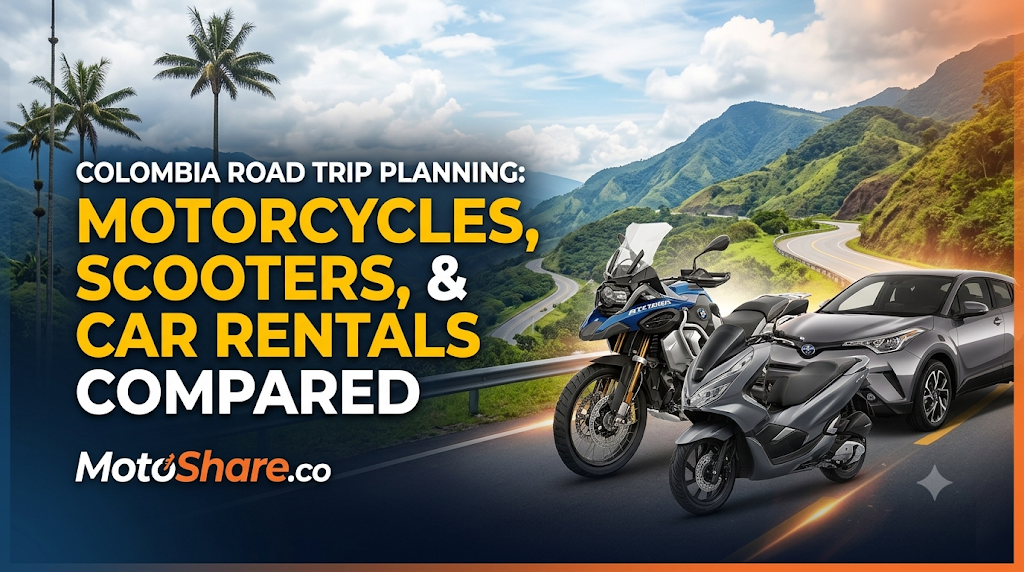
Finding the right vehicle is the foundation of any successful self-drive journey through Colombia. A light scooter might be ideal for navigating neighbourhood streets, while an adventure motorcycle handles high-altitude cordilleras, and a sturdy car provides comfort and weather protection for groups. Selecting a rental that aligns with your specific route, personal driving experience, gear requirements, and travel budget makes all the difference. This comprehensive guide covers urban rentals, scooter mobility, adventure riding, rental cars, organized tours, and the practicalities of planning a safe, memorable journey across Colombia.
Why Consider Motorcycle Rental in Colombia?
Traveling on two wheels offers an immersive perspective that enclosed vehicles cannot replicate. Opting for a motorcycle rental Colombia route allows you to absorb the changing smells of roadside fruit stands, feel immediate shifts in temperature as elevations climb, and pull over easily at scenic viewpoints overlooking deep river canyons.
Key reasons travelers choose motorcycle travel include:
- Exploring at a personal pace: Stop whenever a small village plaza, roadside café, or scenic valley catches your attention without adhering to public bus schedules.
- Flexibility for diverse itineraries: Plan quick day loops through nearby hills or embark on multi-week expeditions across multiple mountain ranges.
- Matching machinery to geography: Choose lightweight dual-sports or nimble street bikes that excel on winding mountain passes where agility is an asset.
- Access to rural destinations: Reach smaller hamlets and secondary roads where larger tour coaches rarely venture.
- Engaging riding dynamics: Navigate thousands of sweeping curves carved into the slopes of the Central, Eastern, and Western Andes.
However, motorcycling is not the right choice for every visitor or every itinerary. Colombia’s high-traffic urban corridors can be intense, mountain rainstorms can arrive suddenly, and unpaved secondary roads require proven physical handling skills. For families, travelers with large luggage, or those seeking reliable shelter from sudden downpours, renting a car often represents a safer, more relaxing alternative.
Motorcycle Rental in Medellín — Explore the City and Surroundings
Medellín, situated in the Aburrá Valley, serves as a natural hub for motorcycle enthusiasts. Known for its pleasant climate, the city combines urban energy with immediate access to some of the country’s finest riding roads across the department of Antioquia.
When planning a motorcycle rental Medellin journey, keep these operational factors in mind:
- Urban traffic and topography: Medellín features steep hillsides, dense traffic during peak commuting hours, and thousands of daily commuter motorcyclists. Lane positioning and defensive riding are essential.
- Weather patterns: While the valley enjoys moderate temperatures year-round, afternoon rain showers can be heavy. Carry waterproof gear at all times.
- Regional routes: Antioquia is famed for day-ride destinations such as Guatapé, Santa Fe de Antioquia, and Jericó. These routes feature significant elevation changes and numerous curves.
- Fuel and travel planning: Gas stations are frequent along major arteries, but travel times can be deceiving. A 60-kilometer mountain ride often takes more than two hours due to heavy truck traffic and winding roads.
- Matching bike to rider skill: Steep, wet urban inclines and tight hairpin turns require smooth clutch control and confident low-speed handling. Select a motorcycle displacement you are comfortable managing.
- Rental parameters: Always check regional boundaries or mileage caps with the vehicle provider before venturing deep into rural Antioquia.
Motorcycle Rental in Bogotá — Plan Your Ride Carefully
Bogotá, located on a high Andean plateau at roughly 2,600 meters above sea level, presents a distinct set of riding conditions. Urban congestion, cooler temperatures, and variable weather mean that securing a motorcycle rental Bogota requires thorough preparation.
Essential considerations for riding in and out of the capital include:
- High-density traffic: Bogotá is notorious for extensive traffic congestion. Navigating city avenues demands constant focus, steady low-speed balance, and acute awareness of buses and delivery riders.
- Cooler climate and rain: Temperatures in Bogotá are significantly lower than in Colombia’s valleys or coasts, frequently hovering between 10°C and 18°C, often dropping lower during rain. Layered, windproof, and waterproof motorcycle gear is vital.
- Strategic departure timing: Leaving or re-entering Bogotá during peak hours can add hours to your trip. Plan departures at dawn on weekends or outside morning and evening rush hours.
- Traffic regulations: Familiarize yourself with local municipal transit rules, including lane restrictions and local traffic ordinances that apply to motor vehicles.
- Route conditions descending the plateau: Leaving the savannah involves descending winding mountain passes toward warmer valleys (such as the route toward Girardot or Villavicencio). These highways experience heavy commercial truck traffic, sharp switchbacks, and changing road surfaces.
- Full protective apparel: Due to cold air, road grime, and unpredictable weather, full-face helmets, armored jackets, abrasion-resistant trousers, and sturdy gloves are indispensable.
Motorcycle Rental in Cartagena — Explore the Caribbean Coast
Cartagena combines historic Spanish colonial architecture with warm Caribbean shorelines, making it a popular base for coastal travel. However, riding here requires adjusting to tropical conditions.
Before arranging a motorcycle rental Cartagena trip, evaluate these local factors:
- Tropical climate considerations: High heat and humidity can lead to rapid rider dehydration and fatigue. Choose well-ventilated riding apparel, stay hydrated, and plan longer riding legs for early morning hours.
- Urban navigation and restrictions: The historic walled city (Ciudad Amurallada) and parts of Getsemaní feature narrow, pedestrian-heavy cobblestone streets where motorized traffic is restricted or impractical. Walking or using licensed local taxis is often simpler for sightseeing within the old town.
- Coastal routes: The coastal highway connecting Cartagena to Barranquilla and Santa Marta offers expansive views, but crosswinds, high temperatures, and salt spray require steady riding and frequent vehicle checks.
- Securing belongings: Keep documents, passports, and electronics in secure, waterproof bags. Never leave personal items unattended on an open vehicle while parked.
- Road surfaces outside town: Secondary roads in coastal regions may feature loose sand, unexpected potholes, or livestock near the roadway. Ride within clear visual limits at all times.
Scooter Rental in Colombia — A Practical Option for Short Trips
Scooters provide accessible, low-maintenance urban transportation. With automatic twist-and-go transmissions, step-through frames, and under-seat storage, choosing a scooter rental Colombia option works well for specific travel needs.
Key points to evaluate when considering a scooter:
- Best use cases: Scooters (typically 110cc to 150cc) excel at short urban errands, exploring relaxed coastal towns, or visiting flat tourist corridors.
- Handling and stability: Smaller wheel diameters make scooters more susceptible to road imperfections, potholes, and speed bumps (known locally as reductores de velocidad or resaltos). They are not engineered for rough gravel roads or steep off-road trails.
- Power limitations on hills: While scooters easily handle level city streets, carrying two passengers and luggage up steep mountain passes can strain smaller engines and reduce braking efficiency on steep descents.
- Protective gear: The convenience of a scooter never eliminates the need for proper protective equipment. Always wear a certified helmet, eye protection, sturdy footwear, and abrasion-resistant clothing.
- Licensing and terms: Ensure your driving license permits operating two-wheeled motorized vehicles of that engine class, and verify the deposit requirements and insurance conditions set by the provider.
Adventure Motorcycle Rental in Colombia — Prepare for Scenic Routes
Colombia’s rugged topography makes it a world-class destination for dual-sport and adventure riding. An adventure motorcycle rental Colombia setup typically involves bikes ranging from 250cc dual-sports to mid-weight 650cc–900cc adventure-touring machines built for diverse terrain.
Preparation essentials for an adventure journey include:
- Selecting the right machine: Balance machine weight against your physical strength and riding experience. A lightweight 250cc–300cc dual-sport is often easier to control on slippery, unpaved mountain roads than a heavy, fully loaded 1200cc adventure bike.
- Understanding road classifications: Paved primary highways (vías primarias) generally offer smooth asphalt, though landslides or roadworks can create unexpected bottlenecks. Unpaved rural roads (vías terciarias) range from hard-packed dirt to deep mud, loose gravel, and river crossings.
- Seasonality and weather: The rainy seasons (typically April–May and October–November, though variable by region) dramatically alter unpaved roads. Heavy rains can trigger mudslides or washouts.
- Fuel range planning: While fuel is readily available along major corridors, remote stretches through cordilleras or national park perimeters may have long distances between reliable service stations. Track your tank range carefully.
- Gear and self-sufficiency: Carry a compact tire pressure gauge, basic tire repair materials, an emergency toolkit, and layered gear capable of handling 35°C coastal heat and near-freezing mountain passes in the same week.
- Rental restrictions: Ensure your rental agreement explicitly permits riding on unpaved surfaces, as some providers restrict their fleet to paved roads.
Motorcycle Tours in Colombia — Guided Trips or Independent Travel?
Travelers must decide whether to plan an independent self-guided road journey or join organized motorcycle tours Colombia operators run across the country. Each approach offers distinct advantages.
Guided Tours
- Local expertise: Tour leaders know the safest, most scenic backroads, current bridge closures, and the best local dining stops.
- Support infrastructure: Many guided tours include a chase vehicle to carry heavy luggage, spare parts, and emergency medical equipment.
- Streamlined logistics: Accommodations, route planning, and mechanical troubleshooting are handled for you, allowing you to focus on the ride.
- Group dynamics: You ride alongside other travelers, which suits those who enjoy social travel but reduces itinerary flexibility.
Independent Travel
- Complete freedom: Change your route, alter your schedule, or linger in a quiet coffee town whenever you choose.
- Budget control: Select accommodations and dining that match your personal financial preferences.
- Self-reliance: Demands higher personal involvement in route navigation, mechanical checks, and direct communication with locals.
Regardless of your preference, verify tour operator credentials, exact package inclusions, insurance deductibles, safety briefings, and cancellation terms before committing to an organized itinerary.
Car Rental in Colombia — When Is a Car the Better Choice?
While two wheels offer unmatched agility, choosing a car rental Colombia booking is often the more practical and comfortable solution for many travel itineraries.
Scenarios where renting a car is preferable:
- Family and group travel: Moving three or more people is considerably more economical and cohesive in a passenger car or compact SUV than renting multiple two-wheelers.
- Luggage capacity: Travelers with multiple hard suitcases, sports equipment, or bulky camping gear require secure trunk space.
- Weather protection: Tropical downpours and cold Andean mountain rain can turn a motorcycle ride into an exhausting endurance test. A car keeps passengers dry and climate-controlled.
- Lower physical fatigue: Driving a car on long highway journeys requires less physical exertion than balancing and managing a motorcycle across hundreds of mountain curves.
- Multi-destination airport transfers: Picking up a vehicle directly at major regional airports allows smooth transitions between flights and road travel.
Car rentals require careful verification of driver age minimums (often 21 or 25), credit card security deposits, comprehensive insurance coverage, and cross-department travel permissions.
Car Rental in Medellín — Planning Local and Regional Travel
Medellín’s location in Antioquia makes it an attractive starting point for road trips through the surrounding mountains. However, organizing a car rental Medellin itinerary requires understanding specific local driving dynamics.
Practical advice for driving in Medellín:
- Pico y Placa regulations: Medellín enforces a strict license-plate restriction system (Pico y Placa) during weekdays to reduce traffic and emissions. Driving a restricted vehicle during designated hours results in substantial fines and vehicle impoundment. Always check the restriction schedule matching your rental car’s final license plate digit.
- Mountain terrain driving: Antioquia’s roads involve steep ascents, descending switchbacks, and slow-moving freight trucks. Renting a vehicle with adequate engine torque and reliable brakes is advisable. Use lower gears when descending steep hills to prevent brake overheating.
- Parking availability: On-street parking is restricted throughout much of Medellín. Always park in secure, staffed public parking garages (parqueaderos).
- Toll roads (Peajes): Well-maintained highways leaving Medellín feature toll booths. Keep physical Colombian Peso currency on hand, as some rural booths may not accept foreign credit cards.
- Documentation checks: Confirm that the car has an active registration card (tarjeta de propiedad), up-to-date mandatory accident insurance (SOAT), and required safety equipment (reflective vest, warning triangles, jack, and spare tire).
Motorcycle Road Trip Colombia — Essential Planning Tips
Embarking on a long-distance motorcycle road trip Colombia provides an unforgettable adventure across some of the most dramatic landscapes on the continent. Proper preparation ensures that unexpected road challenges do not derail your travels.
Core Preparation Steps
- Pace your daily distances: Do not measure Colombian road trips purely in kilometers. A 180-kilometer mountain route can easily take five to six hours due to geography, single-lane roadworks (pare y siga), and slow commercial transport. Limit daily riding to realistic windows (150–250 km).
- Conduct daily pre-ride checks: Perform routine inspections every morning: check tire pressures, inspect the drive chain tension and lubrication, test front and rear brake pads, and check engine oil levels.
- Carry official paperwork securely: Keep your original passport, physical driver’s license, vehicle registration, and SOAT certificate in a waterproof pouch accessible for regular transit police checkpoints.
- Prepare for dramatic elevation shifts: A single afternoon ride can take you from humid river valleys at 300 meters above sea level to chilly mountain passes over 3,500 meters. Dress in versatile layers.
- Establish clear emergency protocols: Save local emergency contact numbers (such as National Police at 123 and Road Police assistance at #767) and share your daily route plan with trusted contacts.
Sample Planning Scenario: The Coffee Triangle Loop
- Route concept: Medellín to Manizales, Salento, and back via secondary mountain highways.
- Terrain: Paved winding roads, intermittent road repair sections, steep climbs, and lush agricultural valleys.
- Vehicle match: A versatile 250cc–500cc dual-sport or standard motorcycle with luggage racks.
- Planning note: Monitor afternoon rainfall patterns in the Quindío department and schedule departures early in the morning to enjoy clear visibility and dry roads.
How to Choose the Right Rental Vehicle in Colombia
Selecting the best vehicle requires balancing passenger count, comfort needs, route difficulty, and driver experience.
Vehicle Comparison Table
| Factor | Motorcycle | Scooter | Car |
| Typical Use | City commuting, winding regional roads, and long-distance mountain journeys | Short urban trips, local neighbourhood errands, and flat coastal areas | Group travel, family vacations, airport transfers, and luggage-heavy trips |
| Luggage Capacity | Limited to side panniers, top cases, and waterproof tail bags | Limited to under-seat compartment and small floorboard space | Substantial trunk and rear-seat storage for multiple large bags |
| Weather Protection | Minimal; fully dependent on high-grade waterproof riding apparel | Minimal; exposed to heat, sun, rain, and road debris | Complete; enclosed cabin with air conditioning, heating, and weather sealing |
| Skill Considerations | Requires specialized motorcycle handling, clutch control, and balance skills | Requires basic two-wheel balance and low-speed vehicle control | Standard driving competence and familiarity with manual or automatic gearboxes |
| Route Suitability | Excellent for twisty mountain asphalt and versatile on rough terrain | Best suited to paved, level urban roads; struggles on steep, rocky trails | Suited to highways and city streets; high-clearance models handle rural roads |
Pre-Rental Evaluation Checklist
Before signing a rental contract or paying a deposit, systematically verify:
- [ ] Total rental cost: Clarify the full daily rate, including taxes, booking fees, and mandatory local charges.
- [ ] Security deposit requirements: Confirm whether the deposit must be placed on a physical credit card, the amount frozen, and the timeline for post-rental release.
- [ ] Licensing and age criteria: Check minimum driver age thresholds and whether your home country license class covers the vehicle displacement.
- [ ] Insurance scope and deductibles: Understand the difference between third-party liability (SOAT) and optional comprehensive collision damage waivers. Ask about the renter’s maximum financial liability in case of damage or theft.
- [ ] Mileage allowances: Determine whether the contract provides unlimited mileage or charges extra fees per kilometer exceeded.
- [ ] Fuel policy: Note whether the vehicle is rented “full-to-full” or if you must return it at the exact fuel level recorded at pickup.
- [ ] Cancellation and modification terms: Verify whether dates can be adjusted without severe penalties in case your travel plans shift.
- [ ] Vehicle condition report: Inspect every panel, wheel rim, light, and control lever. Photograph and document existing scratches or wear before leaving the rental bay.
- [ ] Roadside assistance: Inquire whether the rental provider provides 24/7 breakdown assistance, flat tire support, or vehicle replacement in regional areas.
How MotoShare.co Can Fit into Your Colombia Travel Planning
Organizing transportation in a foreign country can be complex, especially when navigating varying rental standards, regional availability, and localized booking terms. This is where researching dedicated mobility platforms like MotoShare.co helps independent travelers structure their plans.
MotoShare.co connects travelers with vehicle rental options across Colombia, serving as a platform where users can evaluate motorcycles, scooters, and cars suited to their regional travel needs. Rather than contacting individual shops one by one, using an aggregated rental platform allows you to compare different vehicle categories and understand rental conditions in advance.
When evaluating rental options through MotoShare.co or any vehicle rental platform, always verify the following specifics:
- Active vehicle availability: Confirm that the model you need is physically available in your desired pickup city for your specific dates.
- Location support: Verify exact vehicle collection and drop-off points, whether at an airport terminal, an urban branch, or a local partner shop.
- Transparent pricing structures: Review all daily rates, applicable taxes, and security deposit terms beforehand to prevent checkout surprises.
- Licensing eligibility: Verify that your home country motorcycle or automobile license matches the specific requirements of the provider.
- Insurance coverage details: Read the exact terms of included coverage, optional damage waivers, and exclusions (such as off-road riding or unpaved road use).
- Cancellation and refund terms: Understand the policies in place if your travel dates change or flights are delayed.
- Renter responsibilities: Review guidelines regarding regular chain maintenance, tire care, fuel types, and allowable operating areas.
Taking the time to research platforms like MotoShare.co helps ensure you secure a vehicle that matches your travel itinerary, budget, and driving comfort.
Common Mistakes to Avoid When Renting a Vehicle in Colombia
- Choosing a vehicle mismatched to the route: Attempting steep mountain passes on a low-powered city scooter, or navigating narrow cobblestone alleyways in an oversized SUV.Solution: Plan your itinerary first, study road elevation profiles, and select a vehicle engineered for that specific environment.
- Ignoring licensing requirements: Assuming any domestic driver’s license automatically covers high-displacement motorcycles internationally.Solution: Check that your license has a clear motorcycle endorsement and carry an International Driving Permit if your license uses a non-Roman script.
- Failing to understand insurance exclusions: Assuming all damage is covered, only to discover that tire punctures, clutch damage, or off-pavement riding are excluded.Solution: Request the written insurance terms and know your financial deductible before departing.
- Overlooking security deposits: Arriving at the rental counter without sufficient available credit limit to cover security deposit holds.Solution: Verify deposit figures in advance and confirm your credit card has sufficient funds and international clearance.
- Skipping a rigorous vehicle inspection: Rushing through the pickup process and being held responsible for pre-existing scratches, dented rims, or worn tires upon return.Solution: Take timestamped, high-resolution photos and video of the entire vehicle, including the undercarriage and tires, in the presence of the rental representative.
- Underestimating weather and elevation changes: Packing only warm-weather clothing for a trip that passes through high-altitude Andean passes.Solution: Equip yourself with modular, windproof, and waterproof layers capable of adapting to rapid temperature drops.
- Planning unrealistic daily distances: Estimating travel time based on standard highway speeds, forgetting that mountain trucks, sharp curves, and roadworks lower average speeds.Solution: Keep daily driving limits modest (under 250 kilometers for motorcycles) to arrive well before sunset.
- Ignoring luggage and fuel practicalities: Choosing a motorcycle without luggage racks or failing to carry extra fuel along remote rural stretches.Solution: Use secure, lockable luggage or heavy-duty tie-down straps, and refill your tank whenever it drops below half in remote zones.
- Failing to review cancellation terms: Booking rigid, non-refundable rental packages during seasons prone to flight adjustments or weather delays.Solution: Review provider cancellation policies and opt for flexible reservation options whenever feasible.
- Assuming all rental providers offer identical service: Presuming every rental includes roadside recovery, updated safety gear, or newer fleet vehicles.Solution: Compare providers carefully, read terms thoroughly, and ask direct questions regarding breakdown protocols.
Frequently Asked Questions About Motorcycle Rental in Colombia
How can I rent a motorcycle in Colombia?
To rent a motorcycle, research reputable rental platforms or local providers in your destination city. Compare available models based on your route, check licensing criteria, review rental terms and insurance options, and place your reservation with required identification and payment details.
What documents do I need to rent a motorcycle in Colombia?
You will typically need a valid passport with an entry tourist stamp, a valid driver’s license from your home country with a motorcycle endorsement, and a major credit card in the driver’s name for the security deposit hold. Always verify specific document policies directly with your chosen rental provider.
Can international visitors rent motorcycles in Colombia?
Yes, international tourists can legally rent and ride motorcycles in Colombia as long as their home country license includes a valid motorcycle rating and their tourist entry permit remains active. If your license is written in a non-Roman alphabet, you should carry an International Driving Permit alongside your primary license.
Where can I look for motorcycle rental in Medellín?
In Medellín, rental providers and mobility platforms operate throughout major commercial and tourist zones, particularly around El Poblado and Laureles. Exploring centralized platforms such as MotoShare.co allows you to review local partner options and compare vehicle classes across the city.
Is motorcycle rental available in Bogotá and Cartagena?
Yes, both cities have vehicle rental options available. Bogotá offers a variety of street and touring motorcycles suitable for navigating the capital and climbing out into the Andes, while Cartagena caters primarily to urban scooters, coastal cruisers, and regional touring bikes.
Is a scooter suitable for exploring Colombian cities?
A scooter is well-suited for short journeys within flat urban neighborhoods, coastal resort zones, or small towns. However, scooters are less practical for steep mountain climbs, heavily potholed secondary routes, or long-distance highway travel between distant cities.
Should I rent a car or a motorcycle for a Colombia road trip?
The best choice depends on your travel party, experience, and baggage. A motorcycle offers unmatched flexibility and agility through mountain roads for solo riders or experienced pairs. A car provides weather protection, ample luggage capacity, and shared comfort, making it the better choice for families, groups, or travelers unaccustomed to riding in varied terrain.
What should I check before booking an adventure motorcycle rental?
Check the machine’s mechanical condition, tire tread depth, suspension setup, engine displacement, ground clearance, and luggage mounting options. Confirm that the rental contract explicitly permits riding on unpaved roads and clarify what roadside assistance is provided in remote regions.
Final Thoughts
A self-guided road journey through Colombia offers an incredible travel experience, revealing stunning landscapes, vibrant towns, and warm hospitality at every turn. Whether you navigate the lively avenues of Medellín, ride across the Andean passes surrounding Bogotá, or cruise the scenic Caribbean coast near Cartagena, the success of your adventure comes down to thorough preparation and selecting the right vehicle.
Matching your vehicle to your personal driving experience, respecting local road rules, remaining alert to changing weather, and prioritizing safety ensure a seamless journey. As you begin organizing your itinerary, exploring platforms like MotoShare.co can help you research available vehicle types, understand rental requirements, and compare practical options. Evaluate your routes carefully, choose the machine that fits your travel style, and look forward to an unforgettable journey across Colombia.

