
Introduction
Navigating the global telecommunications landscape requires an understanding of the underlying codes that connect mobile devices to wireless networks. Behind every mobile phone call, text message, and data session lies a structured framework of numerical identifiers. These codes route traffic seamlessly across international borders, ensuring that a subscriber’s device can communicate with local infrastructure anywhere in the world.
For developers, telecommunications professionals, researchers, and curious travelers, understanding these identifiers is essential. Investigating network assignments helps clarify which organizations manage specific network assets and how regional numbering systems operate. This article examines the foundational elements of mobile network identification, explains how telecommunications data is structured, and discusses how researchers investigate global provider records using resources such as a Mobile Network Operator Directory.
Understanding the Codes Behind Mobile Networks
The international telecommunications ecosystem relies on standardized numbering systems to identify countries, network operators, and individual cellular devices. The primary framework governing these assignments is maintained through international agreements and technical recommendations, notably those established by the International Telecommunication Union (ITU).
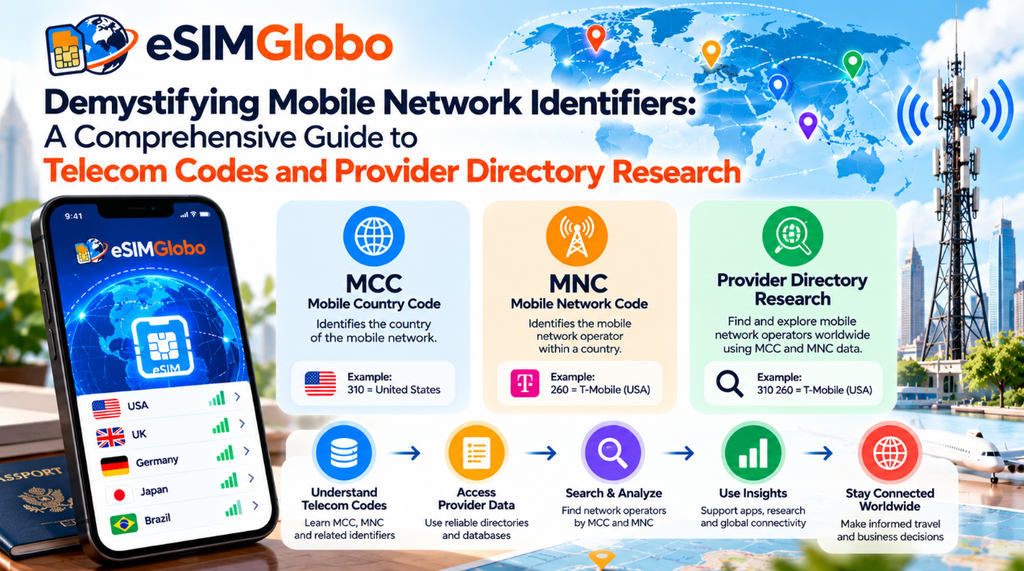
At the heart of cellular routing are three interconnected identifier components:
- MCC (Mobile Country Code): A three-digit code that identifies the country or unique geographic area of the mobile subscriber or network.
- MNC (Mobile Network Code): A two- or three-digit code that identifies the specific mobile network operator within the designated country.
- PLMN (Public Land Mobile Network): The complete network identifier formed by combining the MCC and the MNC (MCC+MNC).
When a mobile device powers on outside its home region, it scans for available wireless signals and reads the broadcasted PLMN identifiers. This process allows the device to determine whether a local network has a roaming agreement with the home carrier.
To perform effective technical research, analysts frequently rely on an MCC MNC Lookup tool or structured reference tables to decode these digital signatures. However, a code assignment alone does not automatically prove that a network is currently active, commercially available to the public, or accessible to every roaming subscriber. Regulatory assignments indicate formal administrative allocations, which may differ from current commercial operations.
Finding the Organization Behind a Network Identifier
Investigating the corporate entity responsible for a specific mobile network code requires access to reliable, structured documentation. When an analyst encounters an unfamiliar identifier, the investigation typically begins with a PLMN Code Lookup to separate the country code from the network code.
Once the individual components are identified, researchers examine official administrative records to determine:
- The legal organization assigned to hold the code.
- The date of initial assignment or subsequent updates.
- The geographic scope or specific technology generation associated with the assignment.
- Official source references provided by national regulatory bodies.
A comprehensive Telecom Operator Database brings these disparate regulatory filings into a unified format, allowing technical teams to review historical changes and verification statuses. However, users must remember that an assigned organization listed in official records may be a holding company, a defunct enterprise, or a wholesale infrastructure provider rather than the retail brand familiar to consumers. Careful cross-referencing with official regulatory publications remains a best practice for validating critical telecom data.
Exploring Network Assignments Across Geographic Regions
Mobile numbering plans vary significantly across the globe. While most MCC assignments correspond directly to sovereign nations or recognized territories, some codes are allocated for specialized international services, satellite networks, or multi-country roaming platforms.
Researchers examining Mobile Network Codes by Country often discover substantial differences in how national regulators manage code allocations. For instance, countries with large subscriber bases and multiple competing infrastructure providers may utilize extensive three-digit MNC formats to accommodate dozens of active network operators. Conversely, smaller territories might maintain only a handful of assigned codes.
When compiling a complete Mobile Country Code List, analysts must account for administrative updates, code splits, and reassignments resulting from mergers or regulatory policy shifts. Relying on verified records ensures that technical applications do not reference obsolete numbering structures.
Understanding Operators, Brands, and Network Relationships
One of the most common points of confusion in telecommunications research is the distinction between infrastructure owners, network-code assignees, and consumer-facing commercial brands.
A mobile network operator typically owns physical cell towers, radio spectrum licenses, and core switching equipment. These entities are the official assignees of the PLMN identifiers broadcasted over the airwaves. However, many brands that market mobile services directly to consumers do not own physical network infrastructure.
Instead, these service providers operate under alternative business models, such as Mobile Virtual Network Operators (MVNOs). An MVNO partners with traditional infrastructure operators to lease wholesale network access, allowing them to offer retail connectivity under their own brand names. Exploring an MVNO Directory helps researchers understand these commercial relationships, which often explain why multiple consumer brands utilize the exact same underlying network identifier.
Organizing Reliable Telecom Data
Maintaining high data quality in telecommunications research requires rigorous sourcing, transparent verification, and consistent record formatting. As global connectivity expands, inaccurate or outdated records can lead to failed integrations, misdirected analytical insights, and flawed compliance reporting.
A reliable information repository depends on several core practices:
- Direct Source Attribution: Linking every record to official ITU recommendations or national regulatory filings.
- Verification Timestamps: Documenting when data was last confirmed against authoritative sources.
- Clear Scope Definitions: Distinguishing between active network assignments, surrendered codes, and pending allocations.
- Structured Error Handling: Identifying duplicate entries, legacy codes, and ambiguous corporate structures.
When professionals utilize a Global Telecom Provider Directory, they rely on these organizational standards to quickly locate verified provider data across international jurisdictions.
Researching eSIM and Connectivity Providers
The rapid adoption of embedded SIM (eSIM) technology has transformed how international travelers and IoT deployments acquire mobile data. Unlike traditional physical SIM cards tied to local retail stores, eSIM profiles can be downloaded remotely to compatible devices.
When evaluating digital connectivity options, users often consult an eSIM Provider Directory to compare supported destinations, regional data allowances, validity periods, and device compatibility requirements. However, it is important to distinguish between different entities in the eSIM ecosystem:
- Infrastructure Operators: Companies that own physical cellular networks and hold official network code assignments.
- Connectivity Providers and Resellers: Businesses that package wholesale roaming access from multiple network operators into consumer-ready data plans.
An eSIM brand offering global data packages rarely operates physical cell towers in every destination; instead, they rely on complex web of international roaming agreements with local operators worldwide.
Potential Developer Use Cases
Software developers, data engineers, and technical analysts frequently integrate telecommunications reference data into enterprise applications. While direct access methods vary depending on platform architecture, developers often conceptualize programmatic access through an MCC MNC Lookup API to streamline data enrichment workflows.
Common technical use cases include:
- Network Validation: Verifying user-submitted MCC and MNC values against standard numbering registries.
- Data Enrichment: Automatically appending operator names and country details to telemetry or call-detail records.
- Fraud Detection: Identifying anomalous roaming patterns or mismatched network identifiers during authentication flows.
- Directory Applications: Powering internal search tools for telecommunications research platforms.
Note: Developers should always verify the current availability, documentation, rate limits, and authentication requirements of any third-end telecom service before building production integrations.
Data Limitations and Verification Practices
Telecommunications data is dynamic and subject to continuous evolution. Mergers, acquisitions, regulatory restructuring, and bankruptcies frequently alter network assignments and corporate ownership structures.
To maintain accuracy, researchers and engineers should apply a consistent verification checklist:
- Check the Source Date: Confirm whether the record reflects recent regulatory filings.
- Verify Administrative Status: Ensure the code is currently active and has not been withdrawn or reassigned.
- Distinguish Brand from Operator: Clarify whether the listed entity is the physical network owner or a commercial reseller.
- Consult Primary Authorities: Cross-reference findings with official national telecommunications regulatory bodies when high-stakes accuracy is required.
Discovering Telecom Insights with eSIMGlobo
For professionals and travelers seeking clarity within the complex telecommunications ecosystem, independent research platforms play a vital role. eSIMGlobo.com serves as an independent global telecom provider directory designed to help users research mobile network operators, explore geographic numbering assignments, and understand telecommunications identifiers.
By providing structured reference data and transparent source attribution, eSIMGlobo helps bridge the gap between complex regulatory filings and practical user research. Whether you are analyzing international roaming paths, investigating network operator assignments, or exploring global connectivity options, structured directory resources provide a dependable foundation for technical discovery.
Frequently Asked Questions
What is an MCC and what does it represent? An MCC (Mobile Country Code) is a three-digit numerical identifier used in wireless telecommunications to represent a specific country or geographic region. It forms the first part of a mobile network identifier.
How does an MNC differ from an MCC? While the MCC identifies the country or region, the MNC (Mobile Network Code) is a two- or three-digit code that identifies the specific mobile network operator operating within that country.
What is a PLMN code? A PLMN (Public Land Mobile Network) code is the complete network identifier formed by combining the Mobile Country Code and the Mobile Network Code (MCC+MNC), allowing mobile devices to recognize specific cellular networks.
Why do some mobile network codes not match commercial brand names? Official network code assignments are issued to legal corporate entities or infrastructure licensees. Many consumer-facing brands operate as virtual operators or commercial resellers using another company’s licensed network infrastructure.
Can an MCC MNC Lookup confirm if a network has active coverage? No. An MCC MNC Lookup verifies the administrative assignment of a network code by regulatory bodies, but it does not guarantee that commercial service is currently active in a specific location.
What is the difference between a mobile network operator and an MVNO? A mobile network operator owns physical network infrastructure like cell towers and radio spectrum, whereas an MVNO (Mobile Virtual Network Operator) leases wholesale access from network owners to provide retail services.
Are all mobile country codes assigned to single sovereign nations? Most MCC values correspond to specific countries or territories, but certain codes are designated for international satellite networks, shared multi-country systems, or specialized roaming applications.
How often do mobile network code assignments change? Assignments change periodically due to telecommunications market developments, regulatory updates, corporate mergers, and new technological deployments, requiring regular updates to reference databases.
Conclusion
Understanding mobile network identifiers is fundamental to navigating modern telecommunications. By breaking down MCC, MNC, and PLMN structures, professionals and curious readers can better understand how global connectivity operates behind the scenes. Whether conducting technical research, analyzing regional numbering plans, or investigating provider relationships, utilizing accurate and transparent reference data ensures reliable insights. Platforms like eSIMGlobo support this exploration by organizing complex telecommunications data into accessible directories for researchers worldwide.

